Stone Stories · September 2025
The Story of Tuff Stone: Millions of Years of Heritage
Stone Stories · September 2025
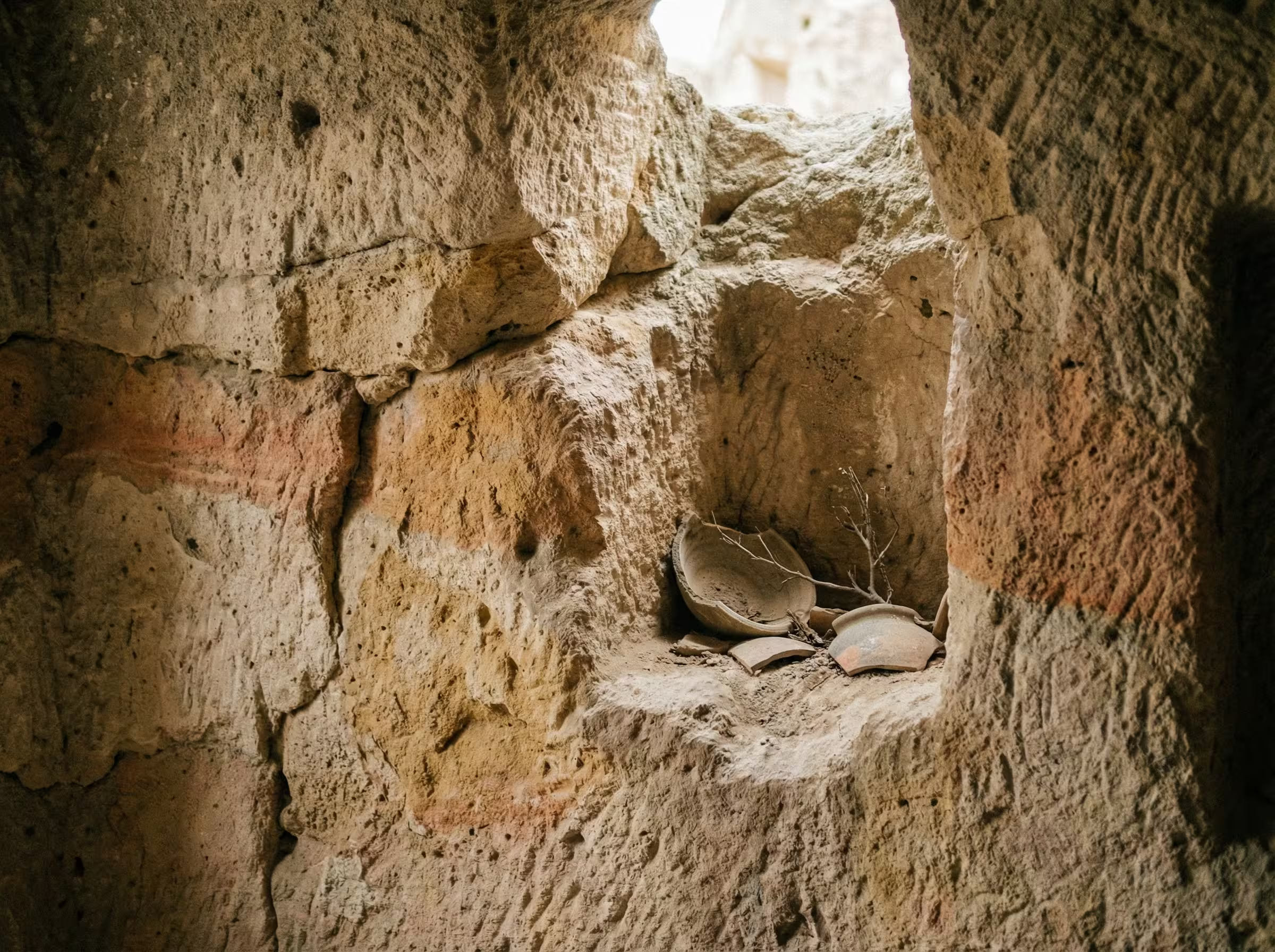
When you wake in one of Anitya Cave House's rooms, you are not simply waking in a room — you are waking inside a geological moment that has lasted millions of years. As a restorer, I felt a quiet shiver every time I touched these walls, and I wish for our guests to feel it too. For this texture reaches far beyond human history, back to the very dance of fire and water.
From Sea to Fire
The Birth of Cappadocia
It is difficult to believe, yet the ground beneath our feet — these valleys we gaze across today — was an inland sea millions of years ago. As the Taurus Mountains rose and the Anatolian plate compressed, the fury buried deep within the earth found its way to the surface. The majestic giants visible on the horizon — Erciyes, Hasan Mountain, and Güllüdağ — were once the wildest artists this landscape had ever known.
For millions of years, these volcanoes expelled lava and — more significantly — dense volcanic ash across the region. Darkening the sky as they fell, these particles slowly settled and compressed over time, forming the soft, workable yet remarkably resilient rock we call tuff today.
The Patience of Wind and Water
The Birth of the Fairy Chimneys
When the volcanoes fell silent, wind and rain took the stage. The Kızılırmak River — the ancient Halys — and floodwaters eroded this soft tuff layer over millions of years. Where harder basalt caps protected the softer tuff below, the fairy chimneys emerged — nature's own sculptures — standing in silent wonder as we admire them today.
Breathing Walls
The Engineering Marvel of Tuff
Restoring Anitya, we were once again struck by the extraordinary engineering properties of this stone. Cappadocian tuff is soft when first quarried or carved — easy to work. But upon contact with air it oxidises and hardens, acquiring a remarkable durability.
The reason your room at Anitya requires no air conditioning lies in the stone's "breathing" structure. Thanks to its volcanic pores, tuff provides superb thermal insulation. When it is sweltering outside, the interior stays cool — around 15°C in summer; when snow blankets the landscape, the interior remains warm. This is the most scientific answer to why the Hittites, Romans, and early Christians sought shelter underground and within the rock thousands of years ago.
The Colour of Stone
Yoşa
The crimson, pink, and mustard tones you will notice on your room's walls, or in the valleys of Ortahisar, are no accident. These colours come from the iron oxide within the earth. For centuries, the local people and the potters of Avanos have used this red clay — which they call Yoşa — as a pigment in their ceramics and in the frescoes of their churches.
To stay at Anitya Cave House is to step away from the coldness of reinforced concrete and to become part of a living organism — one that nature fired over millions of years, carved by wind, and shaped by the mark of human hands. Listen here to the quiet wisdom of the stone. It has a story millions of years in the telling.