
Food · October 2025
Cappadocia Cuisine: From Testi Kebab to Pottery Tables
Food · October 2025
To think of Cappadocia only as a visual feast would be to do a disservice to the abundance of this ancient land. As a restorer who placed every stone of Anitya back into its rightful place, what I felt was that this geography had turned not only shelter, but nourishment itself, into a form of art.
The red alluvial soil of the Kızılırmak — the ancient Halys river — does not only become a work of art on the potter's wheel in Avanos; that same earth holds the secret of flavor on our tables.
Iconic Flavor
The Dance of Earth, Fire, and Meat: Testi Kebab
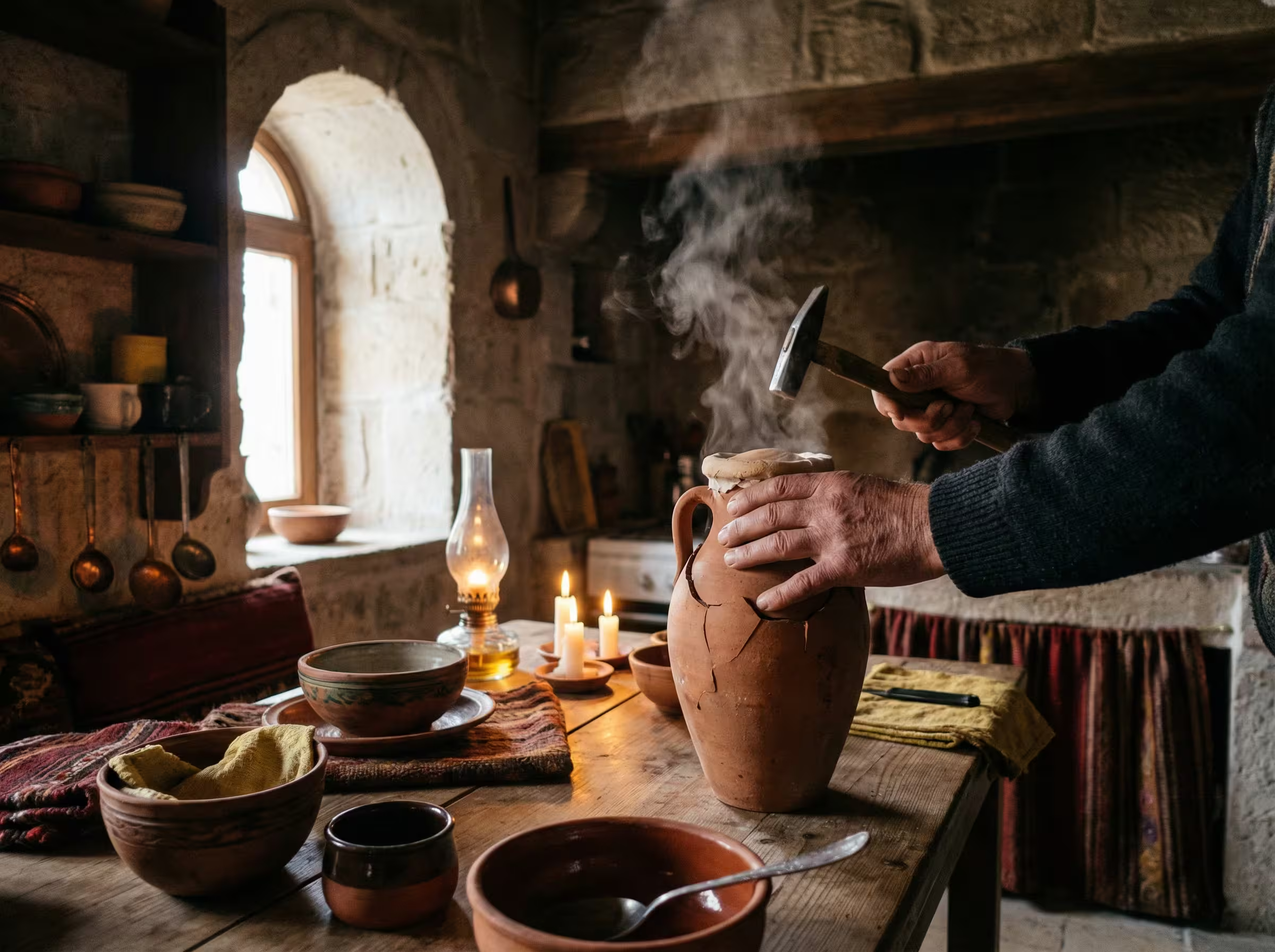
The most iconic dish of Cappadocian cuisine is undoubtedly Testi Kebab. Yet this is more than a meat dish — it is the geological character of the region reflected in the kitchen. The clay extracted from villages north of Avanos is shaped by master craftsmen into cooking vessels.
Testi kebab works on the logic of an ancient pressure cooker. Meat and vegetables are sealed inside these earthenware jugs — known as "testi" in Turkish — and slow-cook for hours in their own juices, untouched by open air, over a low flame. The jug is brought to the table whole and dramatically broken open, releasing the aromas locked inside.
The moment the jug is broken open is not merely a tableside spectacle — it is the instant the earth seals its flavor into the meat.
Cave Coolness
Underground Flavor Cellars
While restoring Anitya, we were struck by the natural climate properties of the cave rooms. For centuries, the people of Cappadocia have used the constant temperature provided by tufa rock — between 7 and 15°C year-round — to their advantage.
The wine cellars you encounter while visiting underground cities such as Derinkuyu or Kaymaklı prove that these people descended beneath the earth not only to hide, but to produce. These natural cold-storage chambers keep the region's celebrated potatoes and lemons fresh for months.
Viticulture Heritage
The Legacy of the Vines: Emir and Dimrit
Tablets stretching from the Hittites to the age of the Assyrian Trade Colonies record how vitally important viticulture and wine trade were in this region. The volcanic tufa soil allows vine roots to reach deep and absorb a wealth of minerals.
Wines made from the indigenous Emir, Dimrit, and Kalecik Karası grapes carry that mineral richness into your glass. A local glass of wine savored on Anitya's terrace as the sun sets is the product of thousands of years of agricultural tradition.
Emir
A white grape variety indigenous to Cappadocia. It carries the mineral density of vines grown in volcanic soil.
Kalecik Karası
One of Turkey's most prized native red grape varieties. Known for its velvety texture and cherry aromas.
At the Table in Anitya
Your Kitchen, Your Discovery
When you stay at Anitya Cave House, you are not in a hotel room — you are inside a living home. By design, we do not offer a standard breakfast service in the mornings; instead, we invite you into the early-morning rhythm of this ancient landscape and its local flavor stops.
The fully equipped kitchens in our Cave Suite and stone houses — with ovens, stovetops, and generous refrigerators — give you everything you need to set your own "Anitya Table" with fresh cheeses from the local market, homemade preserves, and the region's celebrated pumpkin seeds.
Invitation
We invite you on this singular culinary journey where earth transforms into pottery, grape into wine, and cave into home.